
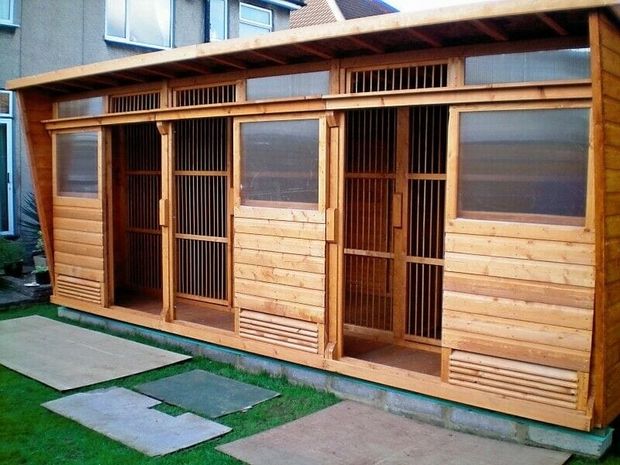
The Essential Guide to Space and Ventilation
One of the most common mistakes for new fanciers is building a loft that is either too small for the birds to thrive or too large to manage effectively. In the world of racing and homing pigeons, the "perfect" size isn't just about floor space—it is about the quality of the air and the psychological comfort of the birds.
Whether you are converting a garden shed or commissioning a bespoke racing loft, here is the breakdown of how much room your pigeons actually need.
1. The Golden Rule: The "Per Bird" Calculation
While there is no single legal requirement in the UK, the industry standard for a healthy, high-performance loft is:
- Floor Space: Aim for at least 2 to 3 square feet per pair of pigeons.
- Air Volume: Aim for roughly 10 to 12 cubic feet of air space per bird.
Why this matters: Pigeons produce a significant amount of dust (powder down) and droppings. If you crowd too many birds into a small space, the air quality drops instantly, leading to respiratory issues like the "one-eye cold" and a total loss of racing form.
2. Capacity Guide: How Many Birds?
To make it easier to plan your build, use this table as a general guide. Note that "Pairs" refers to breeding birds with nest boxes, while "Single Birds" usually refers to young birds or "widowhood" racers on perches.
| Loft Size (Feet) | Total Sq. Footage | Recommended Max Pairs | Recommended Max Single Birds |
| 4' x 6' | 24 sq ft | 6 Pairs | 12 Birds |
| 6' x 8' | 48 sq ft | 12 Pairs | 24 Birds |
| 8' x 10' | 80 sq ft | 20 Pairs | 40 Birds |
| 8' x 12' | 96 sq ft | 24 Pairs | 48 Birds |
Pro Tip: Always aim to be under these numbers. A loft at 75% capacity will almost always outperform a loft that is 100% full.
3. Sectioning Your Loft
Expert fanciers never keep all their birds in one big open room. To manage a successful loft, you need to divide your space based on the birds' "jobs":
- The Breeding Section: Needs enough room for nest boxes. A standard nest box is usually 24 inches wide by 16 inches deep.
- The Racing Section: Usually smaller and more focused. You want just enough perches for your race team so they feel "cosy" and motivated to defend their specific spot.
- The Aviary: If possible, add an external wire-mesh "porch." This allows birds to access fresh air and sunlight (essential for Vitamin D3) without leaving the safety of the loft.
4. Ventilation: The "Second Dimension" of Size
When asking "how big," you must also ask "how much air." A massive loft with no windows is worse than a tiny loft with perfect airflow.
- The Chimney Effect: A well-designed loft should pull fresh air in through vents at the bottom (floor level) and let warm, stale air out through the roof or top of the walls.
- The "Sniff Test": If you walk into your loft and it smells like pigeons, your ventilation is failing. It should smell like the fresh air outside.
5. Summary Checklist for Your Build:
- Height: Ideally 6.5ft to 7ft. High enough for you to stand, low enough to catch birds easily.
- Nest Boxes: 24" x 16" x 16" per pair.
- Corridor Width: 2.5ft to 3ft (enough for you to move with a scraper and bucket).
- Floor Type: Solid wood (easy to scrape) or plastic/metal grids (drops droppings away from birds).
The Expert Tip: Build for the Manager
When calculating size, remember your own comfort. You will be in this loft every day, 365 days a year. Ensure your corridors are wide enough to move freely. If the loft is a chore for you to clean, the birds' health will eventually suffer.


