
Racing
What to Feed a Racing Pigeon After a Race
A bird home from a hard race needs water and rest before food, then a small, light meal. What to give on race day and the days after, and how to stop birds stiffening up.
In the pigeon sport, genetics are the foundation of success. While pristine loft hygiene, rigorous training schedules, and cutting-edge nutrition determine whether a bird can…
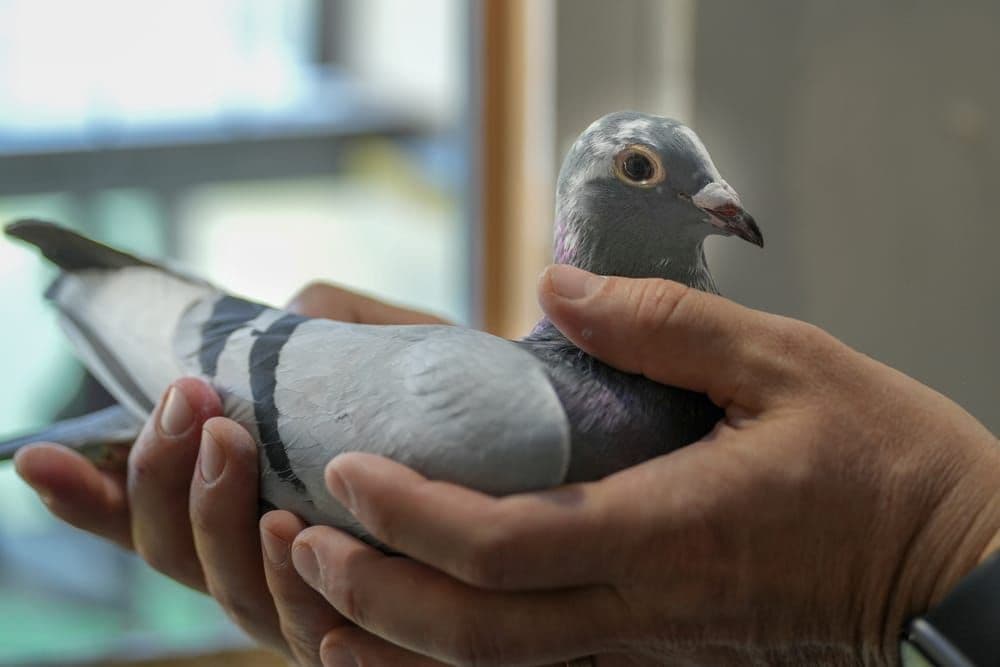
In the pigeon sport, genetics are the foundation of success. While pristine loft hygiene, rigorous training schedules, and cutting-edge nutrition determine whether a bird can reach its physical peak, it is the genetic blueprint that dictates its raw speed, mental navigation grid, and sheer determination to break from the convoy.
Over the past century, selective breeding has established several legendary dynasties. These foundational bloodlines consistently pass down championship traits across generations. For any beginner entering the sport, understanding these historic strains is key to building a competitive loft.
A pigeon bloodline is a distinct family of birds descended from common, highly successful ancestors. Through strict selective line-breeding and inbreeding, masters of the sport have fixed desirable genetic traits into these families.
When evaluating a premium family strain, fanciers look for consistency in the following attributes:
Hailing from Arendonk, Belgium, the Janssen brothers are universally regarded as the most influential breeders in history. During the mid-to-late 20th century, they perfected a family of sprint and middle-distance racers that changed the sport forever.
Based in Dentergem, Belgium, Vandenabeele created a family of birds that completely dominated races spanning 300 to 500 miles.
For races that require birds to fly from dawn until dusk—and often into the second day—the Dutch Jan Aarden strain is unmatched.
Louis Van Loon developed a quiet, unassuming family of Belgian middle-distance birds that became a secret weapon for global crossbreeding.
In the 2000s and 2010s, Leo Heremans broke world records with his lightning-fast sprint family.
Dutch maestro Gerard Koopman constructed one of the most successful contemporary bloodlines by deliberately crossing the raw speed of the Janssens with the heavy muscle endurance of the Van Loons.
Different families have evolved distinct physiological profiles. Matching the right strain to your regional racing circuit is essential:
Bloodline Family | Optimal Distance Style | Primary Physical Trait |
|---|---|---|
Janssen / Heremans | Sprint (Up to 150 miles) | Explosive fast-twitch muscle fibers |
Vandenabeele / Koopman | Middle Distance (150–450 miles) | Aerodynamic efficiency & fast recovery |
Jan Aarden / Stichelbaut | Marathon (450–750+ miles) | Slow-twitch endurance, dense fat storage |
While maintaining pure lines is critical for preserving genetic assets, the actual racers on your flight team are often hybrids. Successful modern fanciers are masters of hybrid vigor (heterosis)—crossing two pure distinct families to create offspring that outperform both parents.
A classic operational template used by elite lofts involves taking a high-velocity sprint sire (such as a Heremans or Janssen) and pairing it with a highly resilient middle-to-long-distance dam (such as a Van Loon or Vandenabeele). This produces a yearling with the raw speed to win, backed by the systemic stamina needed to survive when a race turns into a tough headwind battle.
A world-class piece of paper does not automatically ensure a trophy. A pedigree tracks potential, but real-world execution requires rigorous screening. Experienced handlers verify genetic expression through physical assessment:
Genetics lay down the structural map, but your master loft system dictates whether that bird ever achieves its true destiny.
Racing
A bird home from a hard race needs water and rest before food, then a small, light meal. What to give on race day and the days after, and how to stop birds stiffening up.
Racing
Transitioning young homing pigeons from loft flying to successful road releases is one of the most critical stages in pigeon racing. Rushing this process leads to heavy losses,…
Racing pigeons
Pigeon racing has evolved from a humble traditional hobby into an international multi-million-dollar sport. While a beginner can start with a modest budget, elite bloodlines now…
One email when something new is published. Free, and you can stop at any time.