The Science of Navigation
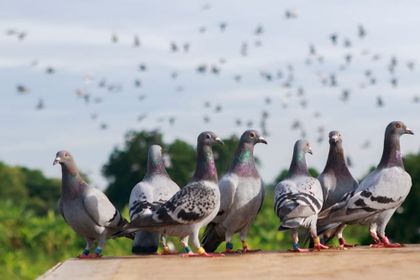
Homing pigeons are famous for their ability to return home over long distances, often flying hundreds of miles with remarkable accuracy. This ability has fascinated scientists for centuries and made pigeons valuable in communication, sport, and research.
But how do homing pigeons actually work? The answer lies in a combination of biological instincts, environmental awareness, and learned behaviour.
This guide explains the science of pigeon navigation, how they are trained, and why they are so reliable.
What Is a Homing Pigeon?
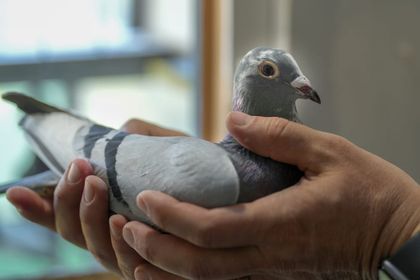
A homing pigeon is a domesticated bird bred specifically for its ability to return to its home loft from unfamiliar locations.
They are a type of rock dove (Columba livia), selectively bred over generations for:
- Navigation ability
- Endurance
- Memory
- Speed
Unlike wild pigeons, homing pigeons have been trained and bred to strengthen their natural homing instinct.
The Core Principle: Returning to the Home Loft
Homing pigeons do not fly randomly. Their entire navigation system is based on one goal:
Returning to a specific home location (the loft).
This behaviour is driven by:
- Strong attachment to their home environment
- Pair bonding with a mate
- Nesting instinct
Because of this, pigeons are always released away from home—they instinctively fly back.
The Science of Navigation: How Pigeons Find Their Way
Scientists believe pigeons use multiple systems simultaneously to navigate. No single method explains their accuracy—it's a combination of several.
1. Sun Compass Navigation
Pigeons use the sun as a directional guide.
- They track the sun’s movement across the sky
- They adjust direction based on time of day
- They rely on an internal biological clock
This allows them to maintain a consistent heading during flight.
2. Earth’s Magnetic Field
Homing pigeons can detect the Earth’s magnetic field, giving them a built-in compass.
- Helps them determine general direction
- Especially useful when visibility is low
- Thought to involve magnetite particles or specialised receptors
This system is most important during long-distance travel.
3. Visual Landmarks
As pigeons approach familiar areas, they rely heavily on visual cues.
They recognise:
- Roads and railways
- Rivers and coastlines
- Buildings and terrain features
Over time, pigeons build a detailed mental map of their surroundings, improving accuracy with experience.
4. Olfactory (Smell-Based) Navigation
One of the most surprising discoveries is that pigeons use smell to navigate.
- They detect regional odours carried by the wind
- These odours create a kind of “scent map”
- Helps them determine their location relative to home
Experiments have shown that pigeons with impaired sense of smell struggle to navigate effectively.
5. Infrasound and Environmental Signals
Some researchers believe pigeons may detect:
- Low-frequency sound waves (infrasound)
- Atmospheric pressure changes
These signals could help pigeons orient themselves over very long distances, especially when other cues are limited.
How Training Enhances Homing Ability
While pigeons have natural navigation instincts, training is essential.
Basic Training Process:
- Loft Familiarisation
Young pigeons learn to recognise their home environment. - Short Distance Releases
Birds are released a few miles away and return. - Gradual Distance Increase
Distances are increased over time. - Route Learning
Pigeons build memory of landscapes and routes.
Training strengthens:
- Confidence
- Speed
- Accuracy
How Far and How Fast Can They Fly?
Homing pigeons are capable of impressive performance:
- Distance: 100–600 miles (typical)
- Exceptional birds: over 1,000 miles
- Speed: 40–60 mph (average)
Weather, terrain, and conditioning all affect performance.
Why Homing Pigeons Are So Reliable
Homing pigeons are reliable because they combine:
- Multiple navigation systems
- Strong instinct to return home
- Learned experience from training
Even if one system fails (e.g. poor visibility), others compensate.
Common Misconceptions
“Pigeons just follow other birds”
False. Homing pigeons navigate independently and can return alone.
“They only use one navigation method”
Incorrect. They rely on several systems working together.
“They always return”
These words have never been spoken by anyone who kept pigeons! Sadly, they don't always return. Weather, predators, and exhaustion can prevent successful returns.
Modern Applications
Today, homing pigeons are used in:
- Pigeon racing
- Breeding programmes
- Scientific research on navigation and animal behaviour
While they are no longer used for communication, their abilities remain unmatched in the natural world.
Summary
- Homing pigeons use a combination of sun position, magnetic fields, landmarks, and smell to navigate
- Their homing instinct is driven by attachment to their loft and environment
- Training enhances their natural ability and improves performance
- Their navigation system is still not fully understood, making them a subject of ongoing research
FAQ: How Homing Pigeons Work
How do homing pigeons know where home is?
They learn the location of their home loft through experience and use multiple navigation systems to return to it.
Do pigeons use GPS-like navigation?
Not exactly, but their combination of magnetic sensing, visual mapping, and environmental awareness functions in a similar way.
Can pigeons get lost?
Yes. Despite their abilities, pigeons can become disoriented due to weather, fatigue, or interference.
Do young pigeons know how to navigate?
They have natural instincts, but they need training and experience to navigate effectively.