The Feathered Heroes:
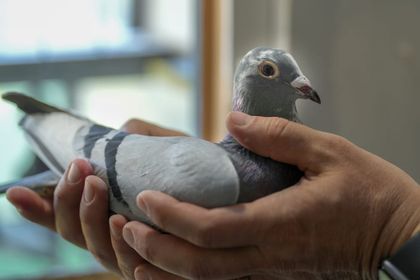
In the age of satellites and digital signals, it is easy to forget that some of the most important messages in history were carried on the wings of a bird. Homing pigeons have played a vital role in human conflict for centuries, serving as a reliable way to send information when all other methods failed. These small, grey birds often held the lives of thousands of men in their tiny, attached message tubes.
The Original Mobile Messaging
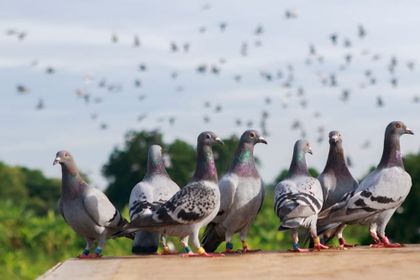
Long before the First World War, people knew that pigeons had a special gift. These birds have a natural "homing" instinct that allows them to find their way back to their lofts across hundreds of miles of unfamiliar land. Scientists believe they navigate using a complex mix of the sun’s position, the Earth’s magnetic field, and even visual landmarks like roads, railways, or rivers.
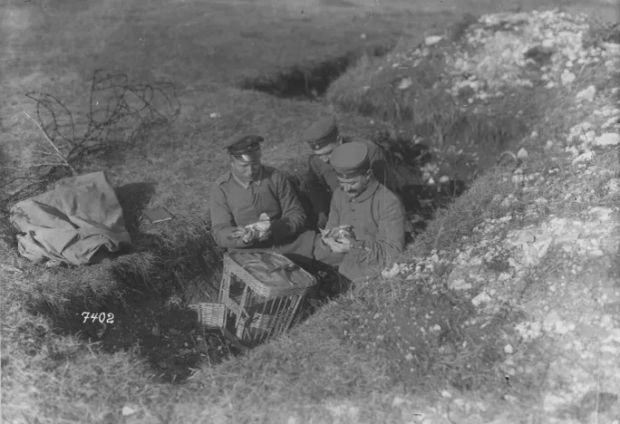
In the heat of battle, this skill became a lifesaver. During the First World War, the British Army set up a dedicated Carrier Pigeon Service. At a time when telephone wires were often cut by shells and early radios were heavy, fragile, and easy to jam, pigeons were the "last resort" for soldiers trapped in the mud of the trenches. By 1918, the British Empire had over 100,000 carrier pigeons serving on various fronts, boasting an incredible delivery success rate of 95%.
Training for the Front Lines
To prepare these birds for war, "pigeonneers" had to be incredibly patient. The birds were moved in mobile lofts—converted buses or horse-drawn carriages—that followed the advancing army. The pigeons had to be trained to recognise these moving homes as their base.
Soldiers would take the birds into the heat of the action in small wicker baskets. When a message needed to be sent, a small piece of thin paper was rolled into a canister on the bird's leg. Once released, the pigeon would circle once or twice to get its bearings and then bolt for the horizon, flying at speeds of up to 60 miles per hour.
Bravery Under Fire
Life for a war pigeon was immensely dangerous. They were not just flying against the wind and rain; they were often released into thick clouds of poisonous gas and smoke. They even faced "anti-pigeon" units—enemy marksmen and trained hawks sent up to intercept them.
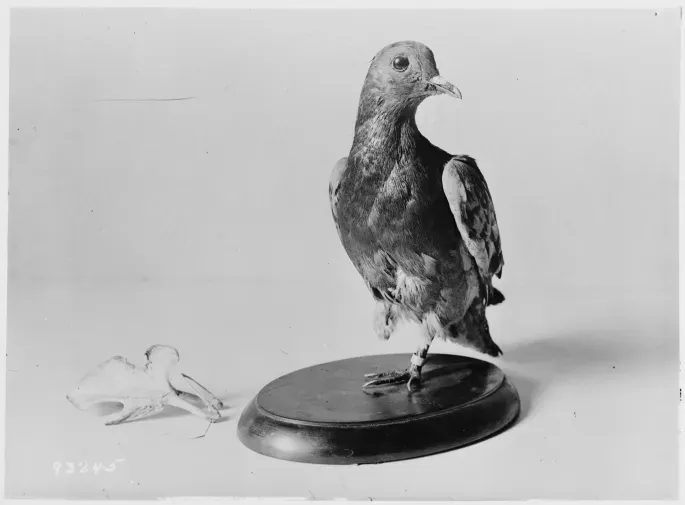
One of the most famous birds was Cher Ami, a pigeon who saved nearly 200 American soldiers during the First World War. Despite being badly wounded by enemy fire, she flew 25 miles in just 25 minutes to deliver a note that stopped "friendly fire" from hitting her own troops. When she landed, she was missing a leg and had been shot through the breast, but the message was still hanging from her cable.
The Second World War and the Dickin Medal
The use of pigeons grew even more sophisticated in the 1940s. The National Pigeon Service was formed in Britain, and thousands of civilian pigeon flyers volunteered their best birds for the war effort. These pigeons were even dropped in containers by parachute behind enemy lines to help resistance fighters send intelligence back to England.
The contribution of these birds did not go unnoticed. The Dickin Medal, often called the "animals' Victoria Cross," was created to honour the bravery of animals in war. Of the 54 medals awarded during the Second World War, 32 were given to pigeons—more than any other animal, including dogs and horses.
A Legacy of Honour
Today, our skies are filled with invisible data and radio waves, and we no longer rely on feathered messengers. However, the story of the homing pigeon remains a powerful reminder of the incredible bond between humans and animals. They were the silent, soaring heroes of the sky, proving that even a small bird, guided by instinct and courage, could change the course of history.
Further Reading & Sources
- Dalmaijer, E. S. (2024). Cumulative route improvements spontaneously emerge in artificial navigators. PLOS Biology. (Exploring how pigeons improve their flight paths over time).
- Meade, J., Biro, D., & Guilford, T. (2005). Homing pigeons develop local route stereotypy. Proceedings of the Royal Society B. (Researching how pigeons use landmarks to find home).
- The Imperial War Museum. Records on the Carrier Pigeon Service (1914-1918).